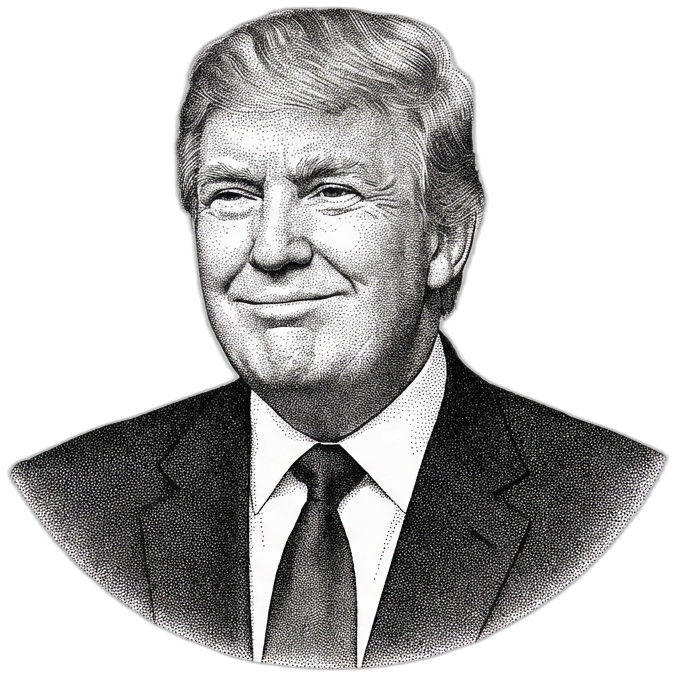
In early 2026, Donald Trump has pursued a strategy of territorial acquisition and military escalation while exerting pressure on domestic institutions. His administration has renewed efforts to acquire Greenland and increased the United States' naval presence in the Middle East. Simultaneously, Trump is engaging in high-profile disputes with the Federal Reserve and major academic institutions while pushing for significant changes to national voting laws.
Donald Trump
Person- Renewed efforts to acquire Greenland amid European military presence in the Arctic.
- Filed a $5 billion lawsuit against JPMorgan and CEO Jamie Dimon.
- Authorized Nvidia chip exports to China while engaging in high-level Russian diplomacy.
Donald Trump began 2026 by renewing a proposal for the United_States to acquire Greenland. This push occurs as European troops arrive on the island. The move signals a significant shift.
Media coverage highlights the administration's view of the territory as a significant strategic asset. This initiative reflects a broader effort to secure Arctic resources and expand American influence in the northern hemisphere.
On January 23, 2026, the president initiated a $5 billion lawsuit against JPMorgan and Jamie Dimon. The litigation targets bank leadership. It marks a period of heightened tension.
This follows his recent criticism of Jerome Powell regarding a DOJ investigation. The litigation signals a period of friction between the executive branch and the nation's largest financial institutions.
Economic reports from January 10, 2026, indicate that employers added 50,000 jobs in the previous month. Trump declared inflation defeated. He delivered this message during a Detroit Economic Club address.
On January 14, 2026, he characterized the economy as a victory. While he maintains this stance, market analysts report mixed fiscal outcomes for the first year of his second term.
Trade policy shifted on January 14, 2026, when the government authorized Nvidia H200 chip exports to China. This decision surprised many observers. It coincides with high-level diplomatic engagement.
Envoy Steve Witkoff traveled to Russia to meet Vladimir Putin during the same period. The administration balances technology competition with diplomacy to navigate the complexities of international relations.
During the World Economic Forum in Davos on January 22, 2026, Trump spoke on perceived threats to Western civilization. He maintains a polarizing presence. He continues to operate as a business magnate.
His dual identity as a corporate leader and head of state informs his policy approach. This background influences his perspective on international trade. He seeks to challenge established global frameworks.
The president's current agenda focuses on territorial acquisition and the direct confrontation of financial elites. He seeks greater executive control. This strategy defines his current approach to leadership.
His administration's interactions with the Federal Reserve suggest a desire to reshape American governance. His legacy remains tied to the disruption of established norms. The topic remains central to modern geopolitical discourse.
Sources: news reports
The Numbers
At a Glance
Age
79 years old
Current Role
President
Primary Organization
United States Government
Net Worth
Publicly estimated; varies by source
Nationality
United States
Education
Wharton School of the University of Pennsylvania
Data via Wikidata
In the News
Current Context
- Trump has escalated military and territorial interests by ordering a second aircraft carrier to the...
- The administration is facing a lawsuit from Nintendo over trade tariffs while Trump seeks a...
- Trump is pressuring Congress to pass the SAVE America Act for voting requirements and has...
Why It Matters
Impact & Significance
- Renewed the proposal for the United States to acquire Greenland in 2026.
- Initiated a $5 billion lawsuit against JPMorgan and Jamie Dimon.
- Secured two non-consecutive presidential terms in 2016 and 2024.
Donald Trump completed the first year of his second term on January 20, 2026. This milestone followed a series of policy initiatives aimed at restructuring United States economic and territorial interests. Results were mixed.
He proposed the United States acquisition of Greenland on January 12, 2026. This renewal of a previous policy goal occurred as European military personnel arrived in the territory. The move indicated strategic objectives.
On January 14, 2026, he criticized Jerome Powell following a DOJ investigation into the Federal Reserve. The investigation examined internal decision-making processes at the central bank. He declared inflation defeated in Detroit.
Donald Trump filed a $5 billion lawsuit against JPMorgan and Jamie Dimon on January 23, 2026. This legal action follows years of public disagreements between the executive branch and Wall Street leadership. It represents a significant escalation.
Envoy Steve Witkoff traveled to meet Vladimir Putin in Russia on January 22, 2026. The meeting sought to address ongoing regional conflicts. Simultaneously, Donald Trump addressed the World Economic Forum in Davos.
He warned of threats to Western civilization during his Davos address on January 22, 2026. The speech emphasized national sovereignty over international cooperation. Global leaders reacted with caution to the nationalist rhetoric.
The administration authorized Nvidia H200 chip exports to China on January 14, 2026. This decision balanced national security concerns with the demands of the domestic technology sector. It marked a shift in trade strategy.
Economic data showed United States employers added 50,000 jobs in December 2025. This growth occurred despite market volatility. The administration cited these figures as evidence of successful deregulation and tax policy.
His career involved roles as a business magnate and investor before his entry into politics. He served as chief executive officer and director of numerous enterprises. His birth occurred on June 14, 1946, in New York City.
His political rise transformed the United States electoral map. He secured the presidency twice, in 2016 and 2024. His influence extends to the Supreme Court where he appointed three justices during his first term.
This reshaped American law. The legacy of his tenure involves a fundamental challenge to institutional norms. He prioritized bilateral trade agreements over multilateral pacts. This approach reshaped global alliances and trade flows significantly.
Trade partners adjusted. His impact on the United States political system remains a subject of intense study. Supporters view him as a agent of institutional change. Critics express concern over the centralization of executive power.
The debate continues. The administration's focus on Greenland highlights a new phase of territorial ambition. Diplomatic engagement with Russia continues to evolve. The final assessment of his second term depends on long-term stability.
Donald Trump maintains a central role in global politics at 79 years old. His actions continue to provoke debate regarding the role of the executive. He maintains a significant influence on the Republican Party.
Sources: News reports from January 2026.
Career
Professional History
- Transitioned from real estate magnate to the 45th president of the United States in 2017.
- Secured a second non-consecutive term in the 2024 election after a period of private sector...
- Maintains a leadership approach characterized by direct challenges to established financial and international institutions.
Donald Trump currently serves as the president of the United States following his inauguration for a second term. He reached the one-year mark of this term on January 20, 2026, amid a period of fluctuating economic data. News reports indicate the administration faces a combination of job growth and persistent fiscal debates.
On January 14, 2026, the president declared that his administration had successfully defeated inflation. He delivered these remarks at the Detroit Economic Club. This declaration came as United States employers added 50,000 jobs in December 2025.
Conflict remains between the executive branch and the Federal Reserve. The president criticized Jerome Powell in January 2026 following a DOJ investigation. This tension reflects ongoing disagreements regarding monetary policy and interest rates.
Legal actions against the financial sector intensified on January 23, 2026. The president filed a $5 billion lawsuit against JPMorgan and its leader, Jamie Dimon. This litigation seeks damages related to banking practices.
Foreign policy initiatives include a renewed effort to acquire Greenland from Denmark. The president first proposed this acquisition on January 12, 2026. European troops arrived in the territory shortly after the announcement.
Diplomatic engagement with Russia continues through special envoys. Steve Witkoff traveled to Moscow to meet Vladimir Putin on January 22, 2026. These talks occur alongside shifting trade policies with China.
On January 14, 2026, the administration authorized the export of Nvidia H200 chips to China. This move suggests a strategic adjustment in technology trade. It balances national security concerns with commercial interests.
At the Davos summit on January 22, 2026, the president addressed global leaders. He warned of specific threats facing Western civilization. His speech emphasized the importance of national borders and cultural heritage.
This political career began after decades as a business magnate and investor. He managed a diverse portfolio of real estate and media assets from his base in New York City. These early ventures established his public profile.
He served as the chief executive officer of his namesake organization until his first inauguration in 2017. That initial term focused on deregulation and trade renegotiation. It set the stage for his eventual return to office.
His path to the presidency involved a transition from private industry to the highest level of public service. He remains the only president to serve two non-consecutive terms since the 19th century. This trajectory defines his current leadership style.
Before entering politics, he operated as a director for numerous domestic and international subsidiaries. His business model relied on high-profile branding and luxury development. This experience influenced his approach to government administration.
The 1980s and 1990s saw his expansion into the casino and hotel industries. He navigated several financial restructurings during this period. These challenges preceded his emergence as a television personality.
His media presence grew significantly in the early 2000s. This visibility provided a platform for his subsequent political campaigns. He leveraged this recognition to build a broad base of support.
Sources: news reports.
Background
Early Life
- Fred Trump provided the initial capital and business philosophy that launched his career.
- The New York Military Academy instilled a lifelong preference for hierarchical authority and discipline.
- Roy Cohn mentored him in the tactics of legal aggression and media manipulation.
Donald Trump completed the first year of his second term on January 20, 2026. His current policy initiatives, including a renewed push for the acquisition of Greenland, reflect long-standing patterns of real estate-driven diplomacy.
Fred Trump, a successful real estate developer in Queens, provided the primary template for his son's career. The elder Trump specialized in middle-income housing across the outer boroughs of New York City.
Born on June 14, 1946, the future president grew up in Jamaica Estates. His household emphasized competition and financial success as core virtues. This environment shaped his later focus on branding and market dominance.
Parents enrolled him in the New York Military Academy at age 13. This environment introduced a rigid hierarchy and a focus on disciplined presentation. It remains a cited influence on his leadership style.
He attended Fordham University for two years before transferring to the Wharton School of the University of Pennsylvania. He graduated in 1968 with a degree in economics. This academic background became a frequent point of reference in his public speeches.
After college, he joined the family business, Elizabeth Trump & Son. He later credited his father with teaching him the technical aspects of construction and negotiation. They worked together on large-scale housing projects in Brooklyn.
The transition from Queens to Manhattan real estate marked a significant shift in his trajectory. He sought larger, more high-profile projects than his father’s residential developments. This ambition led to the creation of the Trump Organization.
Early interactions with attorney Roy Cohn shaped his approach to legal and public disputes. Cohn advocated for aggressive counter-attacks and never admitting defeat. This strategy is evident in his January 2026 lawsuit against JPMorgan and Jamie Dimon.
Norman Vincent Peale, author of *The Power of Positive Thinking*, served as a spiritual mentor during his formative years. Peale’s teachings on the importance of self-confidence became a cornerstone of his public persona. He frequently attended Peale’s Marble Collegiate Church.
His January 16, 2026 push for Greenland mirrors his 2019 proposal. Biographers note this as a continuation of his desire to expand United States territory through transactional means. He views national interests through a lens of acquisition.
Recent economic reports from December 2025 show 50,000 jobs added to the United States economy. These figures coincide with his ongoing criticisms of Jerome Powell and the Federal Reserve. He maintains that his business background qualifies him to oversee monetary policy.
Sources: news reports, biographical records, public archives.
Perspectives
Viewpoints
Supporters
Proponents emphasize his focus on domestic industry and deregulation. They view the January 14, 2026, declaration that inflation has ended as evidence of effective leadership. Results drive their support.
— Sources: news reports
Critics
Opponents argue his methods undermine the independence of federal institutions. They highlight his recent criticism of Jerome Powell and his $5 billion lawsuit against JPMorgan as evidence of overreach. This remains a concern.
— Sources: news reports
Connections
Related Entities
Personal Life
Personal
Donald Trump entered 2026 by renewing a public push for the United States to acquire Greenland, a move that mirrors his previous interest in the territory. This initiative highlights a career-long fixation on significant land acquisitions and territorial expansion. He pursues scale.
His personal life revolves around a family unit that functions as both a social circle and a professional cabinet for his administration. While Melania Trump often chooses a reserved public role, his children remain visible fixtures in his orbit. He prioritizes family loyalty.
On January 23, 2026, he filed a $5 billion lawsuit against JPMorgan and Jamie Dimon, alleging various financial grievances. This action demonstrates his preference for using the legal system to address perceived institutional slights. He values confrontation.
Golf functions as his primary leisure activity and a frequent backdrop for high-level political discussions with world leaders and business executives. He often hosts these figures at his private clubs in Florida and New Jersey. These venues provide seclusion.
During a January 2026 speech at the Detroit Economic Club, he declared inflation defeated despite recent data showing mixed economic results. This pronouncement came during the first year of his second term in office. He prioritizes narrative.
His philanthropic activities have historically drawn scrutiny, particularly regarding the now-dissolved Donald J. Trump Foundation and its past financial practices. The New York Times reports his charitable giving often serves broader business or social goals. He seeks impact.
He recently dispatched Steve Witkoff to meet with Vladimir Putin in Russia, bypassing traditional diplomatic channels in favor of personal envoys. This reliance on trusted associates characterizes his approach to international relations. He trusts individuals.
During the January 2026 Davos summit, he spoke extensively about defending Western civilization from various external threats and cultural shifts. This public stance aligns with his private emphasis on strength and cultural preservation. His image remains consistent.
At 79 years old, he maintains a rigorous schedule of public appearances and recently authorized Nvidia chip exports to China. This decision suggests a pragmatic approach to global trade and technology competition. He maintains an unpredictable reputation.
He criticized Jerome Powell following a DOJ investigation in mid-January 2026, signaling a desire for greater control over the Federal Reserve. Such actions are a recurring feature of his management style. He demands results.
Sources: Reuters reports, The New York Times, media reports indicate, economic reports show.
Get daily updates on Donald Trump and more
Try The Brief Free →Sources
Sources & Citations
- [1] Donald Trump Urges Allies to Control Strait of... (bloomberg.com)
- [2] Donald Trump Urges Allies to Control Strait of... (haaretz.com)
- [3] Donald Trump Urges Allies to Control Strait of... (thehill.com)
- [4] France and Italy Block United States Military... (theguardian.com)
- [5] France and Italy Block United States Military... (foxnews.com)
- [6] Donald Trump Predicts End to Iran Military... (nypost.com)
- [7] Donald Trump to Attend Supreme Court Arguments on... (npr.org)
- [8] Donald Trump Predicts Iran Conflict Will End... (huffpost.com)
- [9] Donald Trump Threatens Iran Energy Grid Over... (thedispatch.com)
- [10] Donald Trump Administration Launches Gen Z... (fortune.com)